
Weather: model values (Open-Meteo, ICON-2I/ECMWF model) for the Palermo city area. Sea temperature and wave height refer to the nearest coastal point (the Mondello area), not a direct measurement. Updated continuously.
Palermo in one sentence: Sicily’s loud, contrast-rich capital combines Arab-Norman UNESCO heritage, baroque squares and one of Italy’s best-known street food scenes. Ideal for culture and city travellers who like an unpolished big city – it isn’t a typical base for a classic beach holiday, and the best-known sandy beach is Mondello. Plan on 2–3 days, more if you add day trips. You don’t need a car in the city – the compact centre, the ZTL zone and traffic make a car more of a liability than a help.
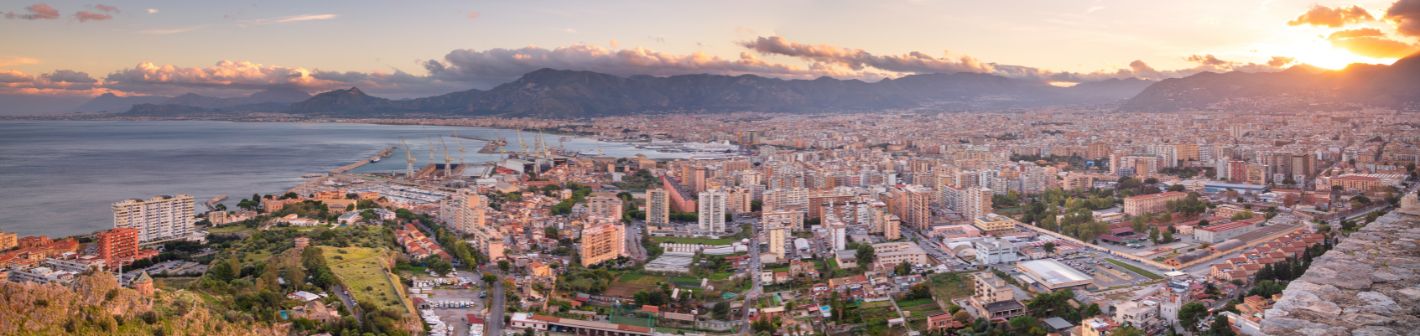
Palermo hits you with full force: in the alleys of the old town, Norman palaces, baroque churches and buildings shaped by Islamic and Byzantine forms stand close together, with market cries, mopeds and the smell of fried street food in between. Sicily’s capital is loud, dense and full of contradictions – and that’s exactly what makes it one of Italy’s most vibrant cities.
The historic centre is easy to explore on foot. From the Quattro Canti, the baroque crossroads at its heart, it’s only minutes to the cathedral, to the Norman Palace with its gleaming Cappella Palatina, and to the market districts of Ballarò, Capo and Vucciria. Much of it lies close together – you don’t need a car, just time and curiosity.
Palermo isn’t a tidy postcard destination. Traffic, noise and the occasional run-down corner are part of the package, and in high summer the heat builds up in the narrow streets. Accept that and start early in the day, and you’re rewarded with world-class art, lively markets and a city that doesn’t put on an act.
Quick-Facts
- Location North coast on the Tyrrhenian Sea; capital of Sicily (around 630,000 residents, a rounded estimate)
- Stay 2–3 days for the city; more with Monreale, Cefalù, Mondello
- Car not needed in the city (ZTL!); only useful for day trips
- Getting there Palermo Airport (PMO); bus/train into the centre in ~35–60 min
- Best time spring & autumn; high summer is hot and tiring around midday
- Good for culture, architecture, markets, street food; less so for a pure beach stay
- Highlights Cappella Palatina, cathedral, Quattro Canti, markets, Teatro Massimo
- UNESCO Arab-Norman Palermo and the cathedrals of Cefalù and Monreale (a serial World Heritage site of nine monuments)
The nine monuments of the serial UNESCO World Heritage Site: Palazzo Reale with the Cappella Palatina, the Cathedral of Palermo, San Giovanni degli Eremiti, Santa Maria dell’Ammiraglio (La Martorana), San Cataldo, Palazzo della Zisa and Ponte dell’Ammiraglio – all in Palermo – as well as the cathedrals of Monreale and Cefalù (source: UNESCO World Heritage Centre).
Who is Palermo worth it for? (Decision helper)| Travel type | Good for | Limitations |
|---|---|---|
| Culture & architecture | Arab-Norman heritage, baroque, museums close together | hot at midday in high summer – start early |
| Food & street food | Ballarò/Capo/Vucciria markets, arancina, panelle, cannoli | loud and busy, especially in the morning |
| City trip without a car | compact centre, on foot + bus/train | remote day trips need a car or a tour |
| Families | markets, puppet theatre, Mondello city beach | a lot of hustle and traffic, summer heat |
| Beach holiday | day trip to Mondello | as a city, not a classic beach destination |
The main sights lie close together in the historic centre and are connected on foot. The table below gives a realistic time estimate for each one and, where applicable, the admission price.
| Sight | Time / admission | Tip |
|---|---|---|
| Norman Palace & Cappella Palatina (UNESCO) | 1.5–2 hrs · full €19, reduced €17 (18–25 yrs), €11 (14–17 yrs) | Tue & Wed without the Royal Apartments (then €15.50); Cappella access may be limited during Mass on Sundays and holidays |
| Cathedral of Palermo | church free · roofs/tombs/treasury approx. €8–15 | rooftop terraces with views over the old town |
| Quattro Canti, Piazza Pretoria & La Martorana | 1–1.5 hrs · squares free, La Martorana ticketed | compact, walkable; mosaics inside La Martorana |
| Ballarò, Capo & Vucciria markets | 1–2 hrs · free | liveliest in the morning; key street food spots |
| Teatro Massimo | ~40 min tour · €14, reduced €7 (under 26, since 07/2026) | Italy’s largest opera house; tours in several languages, check for German-language slots in advance |
| Catacombe dei Cappuccini (Capuchin Catacombs) | 30–45 min · check admission in advance | unusual and striking, not for everyone |
Prices and opening hours change over time (last checked 20 June 2026) and should be verified before your visit. Norman Palace & Cappella Palatina: €19 standard, reduced €17 (18–25) or €11 (14–17) according to the Fondazione Federico II; the palace also houses the regional parliament, so access can be restricted during sessions. Teatro Massimo: €14 (reduced €7 under 26), price as of 1 July 2026 – prices can change seasonally.
The highlights in detailNorman Palace & Cappella PalatinaThe Norman Palace (Palazzo dei Normanni, also known as Palazzo Reale) was the seat of the Norman kings and today houses the Sicilian Regional Parliament. Its centrepiece is the Cappella Palatina, a 12th-century court chapel whose gold mosaics and Islamic-influenced wooden ceiling show the interplay of Byzantine, Latin and Islamic art – for many visitors the most striking interior in Palermo. Allow 1.5 to 2 hours for the palace and chapel, and go early: the chapel is small, and crowds build up by late morning. On Sundays and public holidays, viewing the Cappella can be temporarily restricted during religious services; on Tuesdays and Wednesdays the Royal Apartments are not part of the visit (the ticket is then €15.50 instead of €19); since September 2025 they have again been included on Thursdays.
Accessibility: The bookshop, Cappella Palatina, Sala d’Ercole, Sala dei Viceré, Sala Pompeiana, Sala Cinese and the Giardini Reali are accessible; the Area Archeologica delle Mura Puniche, the Sala Re Ruggero and the Torre Pisana are not. There is no left-luggage facility on site (source: Fondazione Federico II, as of 3 July 2026).
Cathedral of PalermoThe Cathedral (Cattedrale Metropolitana della Santa Vergine Maria Assunta) is a building shaped by many eras: a Norman core from the late 12th century, plus Arab-Norman, Gothic, baroque and neoclassical elements – the large dome belongs to the later rebuilding work. The nave is free to enter; for a fee you can visit the royal tombs, the treasury and the rooftop terraces. The climb to the roof is worth it for the view over the old town and is usually far less crowded than the interior. As an active church, the cathedral expects appropriate dress – shoulders and knees should be covered.
Quattro Canti, Piazza Pretoria & La MartoranaThe Quattro Canti is the baroque crossroads at the heart of the old town, from which the main routes radiate. A few steps away are Piazza Pretoria with its fountain and the church of La Martorana (Santa Maria dell’Ammiraglio), whose Byzantine mosaics are among the oldest in the city and which belongs to the UNESCO ensemble. The squares themselves are freely accessible; La Martorana charges admission (check the current price on site). Early morning or evening the ensemble feels calmer; during the day it’s a busy thoroughfare.
Ballarò, Capo & Vucciria marketsThe three historic markets are the liveliest part of Palermo and good places to try typical street food such as panelle, arancina or sfincione. Ballarò is the largest, a lively everyday food market and especially busy in the morning; Capo is narrow and packed, also best visited in the morning; Vucciria is today less a food market than a historic market quarter that comes alive mainly in the evening with bars and nightlife. A common mistake is just walking through: if you eat at a stall and take your time, you get much more out of the market.
Teatro MassimoThe Teatro Massimo Vittorio Emanuele is Italy’s largest opera house and one of the largest in Europe, a major work of late-19th-century Palermo. Even without a performance, a guided tour through the auditorium, foyer and boxes is worthwhile – it takes about 40 minutes. Tours are offered in several languages; check in advance whether a German-language slot or audio guide is available. Anyone wanting to see the inside should book the tour in advance, as slots are limited. An evening with a regular performance is the alternative for those with more time.
Catacombe dei Cappuccini (Capuchin Catacombs)In the Catacombe dei Cappuccini, several thousand mummified, embalmed or skeletal remains have been lined up in corridors over the centuries, some still dressed. The site is historically and culturally revealing, but stark and not for everyone – anyone uneasy about the sight of mummies, or travelling with young children, should bear that in mind beforehand. The visit takes around 30 to 45 minutes; the crypt lies a little outside the centre and can be reached by bus. Photography is generally not permitted. Check opening hours and admission before your visit.
Palermo on videoThe following videos from external YouTube channels give a first impression of Palermo and show how varied the city is – from the coast to the markets to the old town. They’re meant to offer a glimpse and whet your appetite, but they don’t replace your own research before the trip.
| Situation | Suggestion |
|---|---|
| Half a day | Quattro Canti → cathedral → Norman Palace & Cappella Palatina |
| One day | morning: Norman Palace & cathedral; midday: Ballarò market (street food); afternoon: Quattro Canti/La Martorana; evening: Teatro Massimo & aperitivo |
| In the heat | morning: palace, cathedral & market (Ballarò/Capo); midday break or a museum; from late afternoon: Quattro Canti, Kalsa, Teatro Massimo & Vucciria |
| With children | markets & street food, puppet theatre, afternoon at Mondello beach (there and back takes time, traffic-dependent in summer) |
| Two days | day 1: historic old town; day 2: either Monreale & Mondello, or your own day trip to Cefalù |
Airport: Palermo Falcone-Borsellino (PMO, Punta Raisi), about 35 km west of the city. Bus: Prestia e Comandè runs roughly every 30 minutes into the city; depending on your stop and traffic, the journey takes about 35–60 minutes (ticket approx. €6). Train: the fast Genio Express links the airport with Palermo Centrale in around 34 to 36 minutes; regular regional trains with more stops take longer. There are usually two trains an hour during the day; the adult ticket currently costs €6.80 (children aged 4 to under 12: €3.50). Check the specific timetable for your travel day at Trenitalia. In the city: the historic centre is compact and walkable on foot, plus buses and the tram. By ship: ferries to and from Naples, among others, and to the island of Ustica dock at the harbour. Overview: Getting to Sicily.
Parking & ZTLThe historic centre is a ZTL (Zona a Traffico Limitato – limited traffic zone); cameras record number plates automatically. In summer 2026 the ZTL Centrale applies Monday to Thursday 8am–8pm, Friday 8am–midnight, Saturday midnight–6am and 8pm–midnight, and Sunday midnight–6am; this summer schedule runs until 31 October 2026, with different hours in winter. Check the times and exceptions on the City of Palermo’s website before every drive. For non-residents, this means: it’s best to park outside the monitored old town (in a car park or parking area) and cover the last stretch on foot, by bus or by tram. If your accommodation is inside the ZTL, clarify before arrival whether and how the hotel registers your number plate or arranges an access permit – don’t drive in without confirmed clearance. Full details on zones, times and fines: Parking in Sicily (ZTL & car parks).
SafetyPalermo isn’t a place travellers need to avoid on principle; in tourist areas, ordinary big-city caution is usually enough. Keep an eye on valuables in busy market streets, on buses and around the station; at night, stay aware of your surroundings in quiet side streets. Leaving valuables at the hotel and wearing bags in front puts you on the safe side.
BeachesPalermo is first and foremost a cultural big city, not a classic beach resort. The best-known sandy beach is Mondello, in a sheltered bay about 10–12 km from the historic centre; there are also other bathing spots along the city coast, such as Addaura, Arenella and Sferracavallo (not all of them classic sandy beaches). Mondello can be reached by city bus, among other options – line 806 is often used; check the current route and timetable with AMAT. In summer, Mondello gets very crowded on weekends; it’s quieter early in the day and outside peak season. Free stretches alternate with paid lido sections. More beaches: Beaches in Sicily.
Where to stay (areas)- Old town (Kalsa, Vucciria, around the Quattro Canti): right in the thick of it, short distances, evening atmosphere – can be loud, deliveries only via ZTL clearance.
- Around Teatro Massimo / Via Maqueda: central and well connected, a bit quieter than the market quarter.
- Politeama / Via Libertà: smarter shopping district, good restaurants, short walk to the centre.
- Near the station (Stazione Centrale): practical for car-free arrival/departure and day trips by train.
Palermo is considered one of Italy’s best-known street food cities. Typical dishes include arancina (traditionally feminine in Palermo, “arancino” in parts of eastern Sicily), panelle (chickpea fritters) and crocchè, sfincione (thick Sicilian pizza), and – for the adventurous – pani câ meusa (spleen sandwich). On the sweet side there’s cannoli, cassata and granita with brioche. You experience this most directly at the Ballarò and Capo markets; in the side streets away from the main squares, the food is often better and cheaper than at the tourist spots. Vegetarians can eat well with panelle, caponata and vegetable antipasti. We only give specific, verified restaurant recommendations after editorial review – feel free to ask us for advice.
Day trips from Palermo| Destination | Distance (approx.) | Suitability |
|---|---|---|
| Monreale (cathedral with gold mosaics, UNESCO) | approx. 8 km | half day, easy by bus |
| Cefalù (coastal town, cathedral, beach) | approx. 70 km | day trip, convenient by train |
| Segesta (Greek temple & theatre) | approx. 70 km | half/full day trip, best by car |
| Riserva dello Zingaro (coastal hike) | approx. 60 km | day trip, a car is useful |
| Ustica (volcanic island, diving) | ferry/hydrofoil from the harbour | day tour or overnight stay, weather-dependent |
Travel times depend on traffic and season – don’t estimate them from distance alone.
Common mistakes- Treating Palermo only as a stopover on the way to the airport – the city is worth several days.
- Driving a rental car into the old town (ZTL, fines, lack of parking).
- Scheduling sightseeing during the midday heat instead of starting early.
- Skipping Monreale – its mosaics are among the most impressive in Sicily.
- Monreale – cathedral with gold mosaics, a quiet half-day above the city.
- Cefalù – coastal town with a cathedral and sandy beach, easy by train.
- Mondello – city beach for an afternoon swim.
- Trapani & Erice – for combining Sicily’s west, with its salt pans and hilltop town.
How many days should you plan for Palermo?
Two to three days for the city itself. With day trips to Monreale, Cefalù, Segesta or Mondello, four to five is a good idea.
How do you get from the airport into the centre?
By bus (Prestia e Comandè, roughly 35–60 min depending on traffic, about €6) or by train: the Genio Express takes around 34 to 36 minutes, regular regional trains a bit longer (adults €6.80); buses and trains run roughly every 30 minutes during the day. You don’t need a car in the city itself.
How much does admission to the Cappella Palatina cost?
The ticket for the Norman Palace and Cappella Palatina costs €19 full price (reduced €17 for ages 18–25, €11 for ages 14–17; source: Fondazione Federico II). On Tuesdays and Wednesdays the Royal Apartments aren’t included and the ticket costs €15.50; since September 2025 they have again been included on Thursdays. As of 3 July 2026 – check before your visit.
When does the ZTL apply in Palermo?
In summer 2026 (until 31 October) the ZTL Centrale applies Monday to Thursday 8am–8pm, Friday 8am–midnight, Saturday midnight–6am and 8pm–midnight, and Sunday midnight–6am. Different hours apply in winter. Check the City of Palermo’s website before every drive.
Do you need a car in Palermo?
No. The centre is explored on foot, with buses and trams available too. A car only becomes worthwhile for day trips into the surrounding area – in the old town, it’s more of a hindrance because of the ZTL and traffic.
What should you eat in Palermo?
Street food classics like arancina, panelle, sfincione and – for the adventurous – pani câ meusa, plus sweet treats like cannoli, cassata and granita. Best enjoyed straight from the Ballarò or Capo markets.
Combine Palermo with western Sicily, Cefalù or the islands
Palermo works well as the starting or end point of a wider Sicily itinerary – combined with the west (Trapani, Erice, Marsala), the Aeolian or Egadi Islands, or a relaxed stop in Cefalù. Our travel agency puts together individual routes, arranges car rental, ferry connections and accommodation, and gives honest advice on what’s realistic within your timeframe.
- Province of Palermo – overview
- Monreale Cathedral
- Palazzo dei Normanni & Cappella Palatina
- Cefalù
- Parking & ZTL in Sicily
- Getting to Sicily
- Sicily by rental car
- Sicily’s beaches
- Best time to visit Sicily
- UNESCO World Heritage in Sicily
Editorial content checked: 20 June 2026 · Admission prices checked: 3 July 2026 (Norman Palace & Cappella Palatina: Fondazione Federico II; Teatro Massimo: Fondazione Teatro Massimo) · ZTL: 2026 summer rules until 31 October 2026 (Comune di Palermo) · Train: Trenitalia · Weather: updated continuously. Opening hours, admission prices and transport services are time-dependent and should be checked before your trip. Sources: Fondazione Federico II / Palazzo dei Normanni, Cattedrale di Palermo, Fondazione Teatro Massimo, Trenitalia, Prestia e Comandè, Comune di Palermo (ZTL), UNESCO World Heritage Centre. Weather data: Open-Meteo (CC-BY 4.0).

