
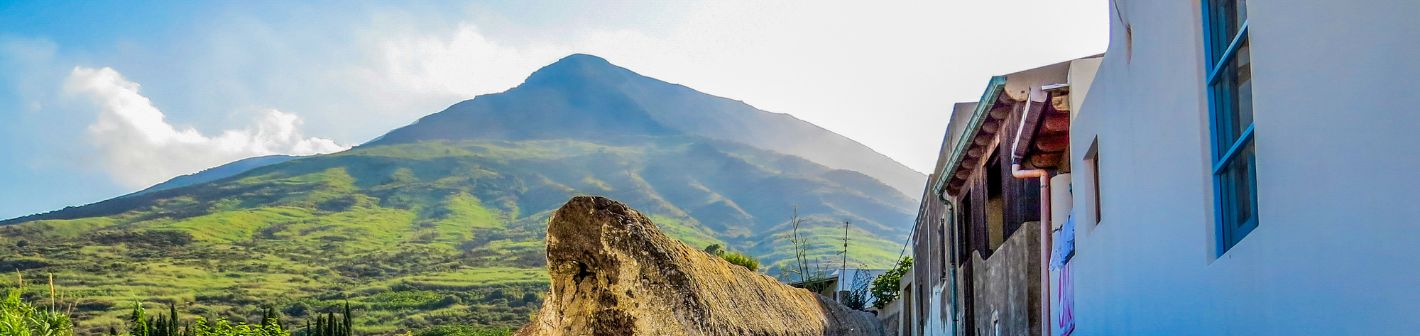
The Aeolian Islands in one sentence: A volcanic archipelago of seven main islands north of Sicily (Province of Messina, a UNESCO World Heritage Site), reached mainly by ferry and hydrofoil from Milazzo – ideal for island hopping between active volcanoes (Stromboli, Vulcano), thermal springs and wine. Good for active, nature and beach travellers; less so for anyone needing fixed schedules and guaranteed connections, since services are weather- and sea-state-dependent. Build in buffer time. As of: 19 June 2026.
Current: Off Panarea, INGV has discovered a new underwater crater with active hydrothermal vents – full details of the discovery.
The Aeolian Islands (Italian: Isole Eolie, also known as the Lipari Islands) are an archipelago of volcanic origin in the Tyrrhenian Sea, north of Sicily’s north coast. Administratively they belong to the Province (Metropolitan City) of Messina. Because of their exceptional volcanic heritage, they are a UNESCO World Heritage Site.
The archipelago comprises seven inhabited or touristically significant main islands: Lipari (the largest and most densely populated), Vulcano (sulphur springs and fango mud), Salina (green, Malvasia wine and capers), Stromboli (a constantly active volcano), Panarea (small and glamorous), and Filicudi and Alicudi (the remote, quiet western islands). Each island has its own character – which makes island hopping appealing, but requires planning.
The main gateway for getting to and from the islands is Milazzo on Sicily’s north coast. From there, ferries and faster hydrofoils (aliscafi) run to the islands. Seasonally, other departure points are also available. Important to know in advance: ferry timetables are seasonal, and in bad weather or high seas, services can be cancelled or shortened – there is always some residual risk for arrival and departure.
Quick Facts
- Location Tyrrhenian Sea, north of Sicily; Province of Messina
- Islands 7 main islands: Lipari, Vulcano, Salina, Stromboli, Panarea, Filicudi, Alicudi
- Origin volcanic; Stromboli and Vulcano are active volcanoes
- Getting there ferry/hydrofoil, mainly from Milazzo; seasonal timetables
- Stay 3–7 days for island hopping; day trips possible, but tight
- Best time May/June and September; high summer is busy and hot, winter has limited connections
- Good for active, nature and beach travellers; less so on a rigid schedule
- UNESCO World Heritage Site (Isole Eolie/Aeolian Islands)
Who Are the Aeolian Islands Good For? (Decision Helper)
| Travel type | Good for | Limitations |
|---|---|---|
| Nature & volcanoes | Stromboli, Vulcano, hikes, geology | volcano access can be restricted by the authorities |
| Island hopping | short sea crossings, several islands combinable | weather-/sea-state-dependent, connections not guaranteed |
| Swimming & sea | clear water, coves, snorkelling | some rocky access points, few sandy beaches |
| Peace & seclusion | Filicudi, Alicudi – almost no traffic | little infrastructure, infrequent connections |
| Without a car | the islands are mostly car-free or low-traffic | ferry/boat logistics needed; luggage transfers |
The Seven Islands at a Glance
| Island | Character | Good for |
|---|---|---|
| Lipari | largest island, lively main town, good base | first-time visitors, base for island hopping |
| Vulcano | sulphur springs, fango mud, crater climb | geology enthusiasts, day trip from Lipari |
| Salina | the greenest island, Malvasia wine, capers | indulgence, hiking, a quieter base |
| Stromboli | constantly active volcano, black beaches | a natural spectacle, evening activity (with caveats) |
| Panarea | smallest of the main group, glamorous, nightlife | style and scene, short stays |
| Filicudi | remote, unspoiled, hiking | peace and quiet, diving, little hustle |
| Alicudi | the most remote, hardly any roads, donkeys instead of cars | radical slowing down |
This assignment is a rough guide (as of: 19 June 2026). Detailed profiles are available on the pages for Lipari and Stromboli.
The Islands in Detail
Lipari
Lipari is the largest and most densely populated island of the archipelago and, for many, the natural base. The main town of the same name offers the best infrastructure of accommodation, restaurants and connections, making it easy to organise day trips to the neighbouring islands from here. Worth seeing are the citadel (Castello) with its archaeological museum, as well as the former pumice and obsidian deposits that recall the island’s volcanic origins. More on the Lipari page.
Vulcano
Vulcano lies closest to Sicily and is often the first island reached from Milazzo. It’s known for its sulphur springs, fango mud baths and the climb to the rim of the Gran Cratere. Two honest notes: the smell of sulphur is intense and not to everyone’s taste, and access to the crater can be restricted by the authorities depending on the volcanic situation. Current conditions and safety notices are available from the relevant authorities and INGV.
Salina
Salina is considered the greenest island of the archipelago and is known for its sweet Malvasia wine and capers. With its two extinct volcanic cones and comparatively lush vegetation, it’s a good destination for hikers and food lovers, and a quieter alternative to Lipari as a base. The island is well connected by ferry and hydrofoil.
Stromboli
Stromboli is one of the few permanently active volcanoes in the world and the archipelago’s most spectacular natural show. Its regular eruptions can sometimes be observed from the sea or from designated viewpoints. Important: climbs and access are regulated by the authorities and can be restricted or closed depending on activity level – rely on the official guidance from the authorities and INGV’s assessment, not on your own assumptions. Details on the Stromboli page.
Panarea, Filicudi & Alicudi
Panarea is the smallest of the main group, considered more glamorous, and known in summer for its nightlife. Filicudi and Alicudi are the remote western islands: unspoiled, quiet and sparsely populated – on Alicudi there are hardly any roads, and loads are still partly carried by donkeys. These three islands suit anyone seeking seclusion; in return, infrastructure and connections are limited.
Getting There (Ferries from Milazzo)
Main gateway Milazzo: The most important departure port is Milazzo on Sicily’s north coast. From there, ferries (slower, carry vehicles) and hydrofoils/aliscafi (faster, passengers only) run to the islands. Getting to Milazzo: by car or by train/bus via Messina in the Province of Messina; the nearest major airport is Catania. Other ports: seasonally there are connections from other places too (including Messina and other Sicilian ports, as well as from mainland Italy). We deliberately don’t list specific timetables and prices here, as they change seasonally – check directly with the ferry operators.
| Connection | Suitability | Note |
|---|---|---|
| Hydrofoil (Aliscafo) | fast, ideal for travellers without a car | sensitive to sea state; cancellations possible in rough seas |
| Car ferry | if you need to bring a vehicle | slower; a vehicle is rarely needed on most islands |
| Inter-island connections | hopping between the islands | seasonal timetables; connections not guaranteed |
Ferry reliability – honestly: Connections to the Aeolian Islands are weather- and sea-state-dependent and not guaranteed. In bad weather, individual departures can be cancelled – this affects both the outbound and return journey, as well as onward connections (flights, trains). Build in buffer time, especially before return flights, and expect thinner timetables in the off-season. Overview: Island Hopping in Sicily.
Island Combinations
| Situation | Suggestion |
|---|---|
| Short (day trip) | from Milazzo to Vulcano and Lipari – tight, but doable |
| Long weekend | base in Lipari, day trips to Vulcano and Salina |
| One week | Lipari + Salina + Stromboli (natural spectacle) + one quiet day |
| Quiet option | Salina as a base, side trips to Filicudi/Alicudi |
| Active/volcano | Vulcano (crater) and Stromboli – depending on official access |
All combinations are subject to weather-dependent connections. Always build in a buffer.
Common Mistakes
- Planning the return journey too close to your flight – ferries can be cancelled due to weather.
- Too many islands in too few days – transferring luggage and waiting times cost time.
- Planning volcano climbs (Stromboli/Vulcano) without checking current official access rules.
- Arriving in high summer without a reservation – accommodation and boats fill up.
- Bringing a car, even though most islands are car-free or low-traffic.
- Overlooking seasonal timetables – in the off-season, far fewer services run.
Alternatives Nearby
- Milazzo & Capo Milazzo – a port town with its own peninsula, the gateway to the islands.
- Messina – gateway to the mainland and starting point for the north coast.
- Aegadian Islands (Favignana) – a different archipelago off the west coast, flatter and sandier.
- Tyrrhenian North Coast – Tindari, Cefalù and beaches as a mainland complement.
Frequently Asked Questions (FAQ)
How do you get to the Aeolian Islands?
The main departure port is Milazzo on Sicily’s north coast. From there, ferries (carrying vehicles) and faster hydrofoils (aliscafi, passengers only) run to the islands. Seasonally, other departure points are also available. Connections are weather- and sea-state-dependent and not guaranteed.
How many islands belong to the archipelago?
There are seven main islands: Lipari, Vulcano, Salina, Stromboli, Panarea, Filicudi and Alicudi. Lipari is the largest and most densely populated, and works well as a base for island hopping.
Can you climb the active volcanoes?
Stromboli and Vulcano are active volcanoes. Climbs and access are regulated by the authorities and can be restricted or closed depending on volcanic activity. Rely on official guidance from the authorities and INGV’s assessments; you cannot make your own hazard forecast.
How much time should you plan for?
Three to seven days make sense for island hopping. Day trips from Milazzo (e.g. Vulcano and Lipari) are possible, but tight. Because of the weather-dependent connections, always build in buffer time, especially before return flights.
When is the best time to visit?
May/June and September offer pleasant temperatures and fewer crowds than high summer. In winter, connections are significantly reduced. More at Best Time to Visit Sicily.
Plan Your Aeolian Islands Trip
Have Your Aeolian Islands Trip Planned for You
Our travel agency plans your route through the archipelago – with the right island base, ferry/boat logistics, accommodation and realistic buffer times for weather-dependent connections. Just send us a no-obligation travel request.
Read More
- Lipari · Stromboli · Island Hopping in Sicily
- Province of Messina · Messina · Best Time to Visit
- New underwater crater discovered off Panarea
As of: 19 June 2026. Ferry and boat connections are weather- and sea-state-dependent, seasonal and not guaranteed; check timetables and prices directly with the ferry operators before your trip. For the current volcanic situation at Stromboli and Vulcano, the relevant authorities and INGV are authoritative. Sources: UNESCO (Isole Eolie), INGV, general knowledge (as of: 19 June 2026).
{“@context”:”https://schema.org”,”@graph”:[ {“@type”:”BreadcrumbList”,”itemListElement”:[ {“@type”:”ListItem”,”position”:1,”name”:”Home”,”item”:”https://www.treffpunkt-sizilien.de/en/”}, {“@type”:”ListItem”,”position”:2,”name”:”Province of Messina”,”item”:”https://www.treffpunkt-sizilien.de/en/province-of-messina/”}, {“@type”:”ListItem”,”position”:3,”name”:”Aeolian Islands”,”item”:”https://www.treffpunkt-sizilien.de/en/aeolian-islands/”}]}, {“@type”:[“Place”,”TouristDestination”],”name”:”Aeolian Islands (Lipari Islands)”,”description”:”A volcanic archipelago of seven main islands (Lipari, Vulcano, Salina, Stromboli, Panarea, Filicudi, Alicudi) north of Sicily, Province of Messina; a UNESCO World Heritage Site. Reached by ferry and hydrofoil mainly from Milazzo.”,”containedInPlace”:{“@type”:”AdministrativeArea”,”name”:”Province of Messina, Sicily”},”touristType”:[“Active travellers”,”Nature travellers”,”Beach travellers”]}, {“@type”:”FAQPage”,”mainEntity”:[ {“@type”:”Question”,”name”:”How do you get to the Aeolian Islands?”,”acceptedAnswer”:{“@type”:”Answer”,”text”:”The main departure port is Milazzo on Sicily’s north coast. From there, ferries (carrying vehicles) and faster hydrofoils (aliscafi, passengers only) run to the islands. Seasonally, other departure points are also available. Connections are weather- and sea-state-dependent and not guaranteed.”}}, {“@type”:”Question”,”name”:”How many islands belong to the archipelago?”,”acceptedAnswer”:{“@type”:”Answer”,”text”:”There are seven main islands: Lipari, Vulcano, Salina, Stromboli, Panarea, Filicudi and Alicudi. Lipari is the largest and most densely populated, and works well as a base for island hopping.”}}, {“@type”:”Question”,”name”:”Can you climb the active volcanoes?”,”acceptedAnswer”:{“@type”:”Answer”,”text”:”Stromboli and Vulcano are active volcanoes. Climbs and access are regulated by the authorities and can be restricted or closed depending on volcanic activity. Rely on official guidance from the authorities and INGV’s assessments; you cannot make your own hazard forecast.”}}, {“@type”:”Question”,”name”:”How much time should you plan for?”,”acceptedAnswer”:{“@type”:”Answer”,”text”:”Three to seven days make sense for island hopping. Day trips from Milazzo (e.g. Vulcano and Lipari) are possible, but tight. Because of the weather-dependent connections, always build in buffer time, especially before return flights.”}}, {“@type”:”Question”,”name”:”When is the best time to visit?”,”acceptedAnswer”:{“@type”:”Answer”,”text”:”May/June and September offer pleasant temperatures and fewer crowds than high summer. In winter, connections are significantly reduced.”}} ]} ]}
